Wednesday, November 30, 2011

ICE Ignores Esteban Tiznado-Reyna's Evidence of Citizenship, Deports Him, Again, to Mexico


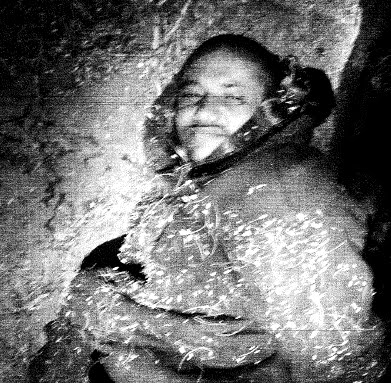
Esteban Tiznado, captured and photographed by Border Patrol in Arizona desert after U.S. government ignores his evidence of U.S. citizenship, taken shortly after midnight, February 23, 2011

In next year's Statistical Yearbook and press releases, Esteban Tiznado-Reynes' deportation Tuesday morning from the Florence Service Processing Center to Mexico will be used to show Immigration and Custom Enforcement's (ICE) efficacy in ridding the country of "criminal aliens." But the truth is that in his case and thousands of others, ICE is disregarding the rules for handling probative evidence of U.S. citizenship,and unlawfully deporting people.

Ignoring information from a local non-profit about a 2008 trial in which a jury believed Tiznado's evidence of U.S. citizenship and thus found him "not guilty" of "Illegal Reentry" (a charge predicated on alienage), ICE agents Monday refused to heed Tiznado's plea to appear in an immigration court and simply dumped him Mexico. (On Monday Tiznado placed numerous panicked calls about once again being effectively kidnapped and taken from his country.)

When Jesus Tiznado, Esteban's father, was born the Tiznado family lived where they had for the last 10,000 years, according to Esteban's court-appointed attorney, Jesse Smith, "They were part of the Tohono O O’dham tribe, one of the oldest tribes continuing in one place. Their tribe goes from Tucson east, halfway to San Diego." He continued, "[Esteban's] dad was born in 1922 in a little town called Tapowa, north of the border. The tribe didn't have a hospital. Everyone was born at home." Esteban was born in 1974 in Mexico to a Mexican mother. "The dad had the family down there because it was cheaper," Smith explained. Esteban was the last of ten kids and in 1977, when he was three, the "father brought the whole family up to Tucson."

In 1979 the father applied and had approved a delayed birth certificate for himself certified by the Arizona Office of Vital Records. It references receipt of Jesus Tiznado's October 10, 1924 Certificate of Baptism, an October 29, 1928 record of his elementary school enrollment at age six in Arizona's Gilbert Public Schools, reference to Jesus's U.S. birth on his daughter's 1958 Mexican birth certificate, and the 1977 affidavit of a family friend.

In 1989 the Citizenship and Immigration Services denied Jesus Tiznado his request for Certificates of Citizenship for his children, the only explanation being that Tiznado had submitted a delayed birth certificate, without any evidence that would suggest it had been obtained fraudulently or was defective in any other way. Smith says, "What's really offensive here is that some immigration agent who's been here less than 500 years kicking out someone who's been here 10,000 years. That's kinda nervy." Finances prevented an appeal, Smith explains, "It would have cost them $100 per kid. [The government] said no and that was that. No one was getting kicked out at the time," and the family let the matter drop.

In the 1990s Congress decided to demonize criminal aliens and Esteban, convicted of possessing 20 lbs of marijuana, was on their radar. When he was released in 2000 following his prison time for this and an attempted car theft charge, he was deported to Mexico. He was caught trying to return -- what's this guy going to do in Mexico with no family, no friends, no place to live? -- and charged with Illegal Reentry. His court-appointed defender, concerned about the previous convictions upping the sentencing for this -- encouraged him to plead guilty rather than assert his U.S. citizenship. Esteban served a 51 month prison sentence for a crime for which U.S. citizenship is conclusive evidence of innocence.

After serving his sentence he again was deported and again returned, and again was caught and again charged with Illegal Reentry in 2006. This time, though, he had a good lawyer. Jesse Smith, a Tuccon criminal attorney, organized the testimony of an expert witness, family members, and produced documentary evidence of Jesus Tiznado's U.S. citizenship as well has his having met the residency criteria for automatically conveying U.S. citizenship to his Mexican-born children. The only defense against the Illegal Reentry charge was Esteban's U.S. citizenship and jury notes to the judge show this was the issue on which they were focused.

On April 24, 2008 they unanimously voted Not Guilty. On April 30, 2008 Smith moved on grounds of Double Jeopardy to dismiss a remaining order for his arrest -- the government was claiming that, although he was not convicted, the "Illegal Reentry" charge violated the conditions of his 2006 parole -- and prevailed. Tiznado was free, or so it might seem.

After the trial, "ICE picks him up and says fuck you, as far as we're concerned you're not a citizen." In May, 2008 they deported him again. "There's an opinion from the Ninth Circuit that says they can't prosecute him, it's Double Jeopardy. The don't prosecute him, but they keep kicking him out."

And Tiznado, who does not belong in Mexico, keeps returning home. But it's becoming more and more dangerous, and expensive, and even deadly. "It used to be very easy to walk back in illegally. I don't know how many times they've kicked him out and he would come back in, but they've really expanded all these check points. And because of the war against drugs in Mexico, some of the cartels have taken over the alien smuggling. You can't come in on your own anymore, they'll kill you."

For his most recent return in February, 2011, his mom and his sisters sent him $1,000 to pay a coyote. After two days of walking, and 50 miles in from the border the coyote shows the four guys who've paid him some burlap sacks of marijuana dropped off by pick-up trucks to evade the highway checks, and orders them to put them on their backs. Border Patrol caught them and they were arrested and Esteban initially charged with Illegal Reentry and Possession With Intent to Distribute Marijuana. Smith demonstrated Esteban's innocence through physical evidence (the absence of any burlap fibers on Esteban), medical records (recent and past hospitalization operations), a scar from surgery, and the testimony of someone else in the group ("This guy wasn't carrying anything because of his back injury"). It was a bench trial. By then the prosecution had dropped the Illegal Reentry charge because of Double Jeopardy, and on November 22, 2011 Judge Cindy Jorgenson found Esteban Not Guilty on the drug charge.

Nonetheless, a week ago Tuesday, as the country was preparing to celebrate the destruction of the towns and peoples who lived here before invaders inspired by the pursuit of Paradise and Amazons wiped them out, Esteban remained in government custody, estranged from his family, including his mother, Julia, who is presently hospitalized.

The legal picture here appears murky because of the dead zone between the government not meeting its burden of proof of his alienage and Tiznado seeming not to meet his burden of proof, because he is foreign born, of U.S. citizenship.

The scenario in which Tiznado and many others find themselves is liminal and thus provocative of all sorts of fascinating questions about the vagueries of borders, nationalities, and immigration charges that mix civil and criminal adjudications. But by no means does this absolve the government of the charge of false imprisonment and kidnapping.

Here's why:

1) On November 19, 2009 John Morton issued an order to ICE agents and attorneys stating that "because of complexity of citizenship and nationality law, many [cases] may require additional investigation and substantial legal analysis. As a matter of law, ICE cannot assert its civil immigration enforcement authority to arrest and/or detain an USC [United States Citizen]." The memorandum also states: "In all cases, any uncertainty about whether the evidence is probative of U.S. citizenship should weigh against detention." Esteban was telling ICE agents at Florence that he'd won a trial based on new documents and expert statements about his U.S. citizenship. Why didn't someone look this up?

2) On Monday, a local nonprofit attorney called ICE at Florence SPC and asked them to hold off on Esteban’s deportation until further investigation could be done on his citizenship claim. In other words, ICE knew about Esteban's claims and he was not simply lost in the cracks of the vast deportation machine. A deportation officer at Florence SPC told her that a previous analysis of his U.S. citizenship claim would stand in the absence of any new evidence to the contrary and he would be deported that evening.

3) Tiznado has a cousin, Humberto, now in Utah, who was in a similar situation in San Diego during the same time frame. Humberto was represented by ex- San Diego Federal Defender, Sara Peloquin. Humberto also had been originally denied his Certificate of Citizenship but then appealed and prevailed. She writes, "In spite of a letter [to ICE] from the AUSA [Assistant U.S. Attorney] indicating there was a strong likelihood that my client was a citizen, they [ICE] deported him." (Thanks to some incredible work by Sara, Humberto is now back in Utah and I will describe his experiences later.)

4) The “Reinstatement of Removal Order” authorized by CFR § 241.8 states: “The immigration officer shall attempt to verify an alien's claim, if any, that he or she was lawfully admitted…” U.S. citizens cannot be found to have violated rules for lawful entry. The immigration agents’ failure to investigate the evidence of Esteban’s U.S. citizenship violates the regulation and thus, absent legal authority for his imprisonment and removal, renders these actions false imprisonment and kidnapping.

It's tempting to dismiss this case because of Esteban's convictions. Esteban's no choir boy, but he never held someone captive for 51 months.

On Tuesday the local attorney spent the day poring through the 2008 trial transcripts, tracking for the benefit of Florence SPC deportation officers the evidence of Esteban's U.S. citizenship that had proved so convincing for the 12 Arizona jurors. For naught. Esteban had been deported on Tuesday morning, and his whereabouts are currently unknown. ICE has stated that they will conduct a new analysis of his claim to citizenship, but even if they correctly conclude he is a citizen, there is no way to let Esteban know of their decision.

UPDATE DECEMBER 2: Yesterday Esteban called his attorney from Caborca, Mexico.

UPDATE DECEMBER 3, 1: 30 pm: I just spoke with Estevan. He is in Caborca because another person on the bus from Florence SPC to Mexicali on Tuesday is from there and said he could spend two nights with him. He's worn out his welcome sleeping on Manuel's floor and has no money and no idea where he will go in the next few hours. His mother is elderly and sick and his siblings are scrambling to make ends meet for their own families, "especially because Christmas is coming," Estevan told me, and therefore are unable to help him out.

To read more, see "U.S. Government Unlawfully Deporting U.S. Citizens as Aliens," Virginia Journal of Social Policy and the Law, 2011, 115 p.

Saturday, November 26, 2011

U.S. Citizen Sues ICE for False Imprisonment in Minnesota


An article in the Star-Tribune by Paul McEnroe reveals yet another U.S. citizen who was falsely imprisoned.
A Minneapolis man was arrested and illegally detained for 43 days by federal immigration agents who sought to have him deported even though he is a U.S. citizen, according to a lawsuit filed recently in federal court in Minneapolis.
Mr. McEnroe didn't tell me the details of the case he was following during our interview, but now that the story is published it appears that the fact-pattern that led to Anthony Clarke's unlawful incarceration is typical of the ones I tracked among the 2006-08 files of the Florence Project, the country's largest federally-funded legal orientation program for people in immigration jails: the person targeted for deportation has a marijuana conviction and is foreign-born.

Millions of U.S. citizens are foreign-born and acquire or derive U.S. citizenship by operation of law, e.g., Sen. John McCain. Immigration and Customs Enforcement (ICE) targets those who are foreign-born and have some run-in with the criminal database, yielding the arrest of criminal aliens and criminal U.S. citizens alike.

ICE agents are indifferent to civil rights, leading to the arrest of a U.S. citizen occurring in about one percent of all ICE arrests, meaning about 4,000 cases last year alone.

You may download "U.S. Citizens Unlawfully Detained and Deported as Aliens" published in the Virginia Journal of Social Policy and the Law here.

Photo of Anthony Clarke from the Star-Tribune.


Wednesday, November 23, 2011

USCIS Official Rebuffs Morton Memorandum on Detaining U.S. Citizens


"Santa Fe Man One of Thousands of Legal Citizens Rounded Up by ICE," is the latest headline announcing the persistence of the Department of Homeland Security's (DHS) kidnapping and false imprisonment of U.S. citizens.

In a case reported by Sandra Baltazar Martinez in the Santa Fe New Mexican on November 20, 2011, Emilio René Pincheira Dennett, a naturalized U.S. citizen, was held by Immigration and Custom Enforcement's (ICE). From the moment he was arrested by agents barging into his house, he asserted his U.S. citizenship, and provided information sufficient for ICE to have not only checked out his claims but also to release him, per the official and demonstrably ignored ICE policy on handling those who assert U.S. citizenship.

John Morton's November 19, 2009 memorandum to ICE agents states that as a "matter of law, ICE has no jurisdiction over U.S. citizens" and that "Agents and officers must fully investigate the merits of any claim to citizenship made by an individual who is subject to an NTA [Notice to Appear in an immigration court]." Information about naturalization would have been maintained in DHS databases easily accessible to ICE agents and attorneys, who appear not to have followed up on this. As well, the Morton memorandum states: "In all case, any uncertainty of whether the evidence is probative of U.S. citizenship should weigh against detention."

In a textbook case of DHS misstating its responsibilities and failing to hold its agents accountable for this egregious civil rights violation, Tim Counts of the U.S. Citizenship and Immigration Services, is reported to have told Martinez that "the burden of proof falls on the individual detained to produce documentation." This is an accurate statement of the burden of proof for an individual who is not born in the United States to prevail during deportation proceedings in an immigration court, but it is an erroneous statement of the legal burden of proof for "an individual detained."

To be clear, Counts is from USCIS and not ICE, but if he is going to state the policy of another agency, then he might want to make sure that he gets it right. Circulating a statement at odds with efforts to deter the detention of U.S. citizens reveals a lot about the mindset of DHS officials: absent specific knowledge they impute illegal authority to their agents.

The ICE response? "No system is perfect," according to Leticia Zamarripa, the ICE spokesperson quoted by Martinez.

For research on the large-scale of these imperfections, the government's euphemism for kidnappings and false imprisonment, see "U.S. Government Unlawfully Detaining and Deporting U.S. Citizens," published in the Virginia Journal of Social Policy and the Law (click on upper left "One Click Download) and cited by Martinez, along with statements from Ted Robbins' NPR story, "In the Rush to Deport: Expelling U.S. Citizens," which aired on October 24, 2011 . (Yeah, I know: "Expelling"?! Robbins' story is terrific and I'm blaming a clueless NPR editor for equating losing one's home, community, job, house, and everything else with being sent home from school.)

Thursday, October 6, 2011

Release of Journal Article on Unlawful Detention and Deportation of U.S. Citizens as Aliens


My article "U.S. Government Unlawfully Detaining and Deporting U.S. Citizens as Aliens" appearing in the most recent issue of the Virginia Journal of Law and Social Policy (18.3) is available for downloading as a pdf on the Social Science Research Network.

(Click on "One-click Download" just above the title. Also, the journal is behind in its publication schedule; its "Spring 2011" issue in which my article appears is only recently available as a hard copy and not yet online.)


The article reflects several years of research on how the lapses in deportation law and its practice are so extreme that those over whom the Department of Homeland Security has no legal jurisdiction are being held against their will and removed from their country. If any one else were doing this, the Department of Justice would go after them for false imprisonment and kidnapping, and yet the only restraint on these practices so far has been Congressional oversight hearings in which ICE officials claimed these events did not happen, and a number of lawsuits in which the government has paid out significant amounts in damages, including a February, 2011 $400,000 settlement and revised rules following a complaint by a client of the Northwest Immigrant Rights Project. However, the only one suffering from these actions are U.S. taxpayers.

For instance, according to ICE spokesperson Barbara Gonzalez, despite the fact that ICE agents submitted an arrest report with inaccurate information and in December, 2008 deported to Mexico Mark Lyttle, born in North Carolina and with no Mexican relatives or knowledge of Spanish, no one was investigated or punished for this, or for the coverup of these events written by ICE agents in Atlanta for internal circulation following Mr. Lyttle's return and additional efforts to deport him on an expedited basis, despite his recently issue U.S. passport obtained from a consular office in Guatemala City.

As those familiar with this blog know, I have written extensively about Mr. Lyttle's case; the journal article includes numerous other previously unpublished profiles of U.S. citizens unlawfully incarcerated and deported by the DHS. The pros at the Northwestern University Public Affairs Office released this statement today and did fine work summarizing the 115 page article:


NORTHWESTERN UNIVERSITY NEWS

MEDIA CONTACT: Hilary Hurd Anyaso at (847) 491-4887 or h-anyaso@northwestern.edu

FOR RELEASE: October 6, 2011

ILLEGAL DEPORTATION OF U.S. CITIZENS
Study finds U.S. government unlawfully incarcerating, deporting citizens as aliens

EVANSTON, Ill. --- Thousands of U.S. citizens across the country are being held in prison until they can prove their U.S. citizenship, even though the U.S. Department of Homeland Security (DHS) lacks authority to hold U.S. citizens, according to a report in the latest issue of the Virginia Journal of Social Policy and the Law, available at http://papers.ssrn.com/sol3/papers.cfm?abstract_id=1931703/.

Jacqueline Stevens, professor of political science at Northwestern University and an expert on the practices of the Immigration and Customs Enforcement (ICE), reports on several previously unpublished cases in the journal. Mario Guerrero, a California truck driver, was deported and then, on his return, charged with False Personation of a U.S. Citizen. He was incarcerated for seven years for immigration violations, even though he acquired U.S. citizenship at birth from his father, also a U.S. citizen, a fact the government finally recognized in 2007.

In another case, a man born in Lawrence, Mass., was deported to the Dominican Republic when he was 19. It took “William” more than a decade before his U.S. citizenship was recognized in 2009.

“Some of these U.S. citizens found the Immigration and Customs Enforcement custody so physically and emotionally debilitating that they capitulated to ICE officers who pressured them to sign statements falsely conceding their lack of U.S. citizenship,” Stevens said. “They preferred deportation to ICE confinement.”

Stevens’ research on southern Arizona records found 82 people locked up in immigration jails between 2006 and 2008 whose deportation orders were terminated by Department of Justice (DOJ) adjudicators because of U.S. citizenship. She found that most were held for more than one month and five were held for more than one year. Because of the size of the study and the findings’ consistency with other studies, Stevens concludes that among the approximately 400,000 people held this year by ICE, 4,000 will be U.S. citizens.

To ascertain the rate at which U.S. citizens are in ICE custody, Stevens reviewed data from more than 8,000 files maintained by the country's largest federally funded legal orientation program for 2006 to 2008. She also examined 2010 email traffic on assertions of U.S. citizenship by those in ICE custody from November 2009 to March 2010 obtained under the Freedom of Information Act, interviews with immigration attorneys and immigration judges and a report by a New York City Bar Association.

The plurality of U.S. citizens held in southern Arizona whose civil and constitutional rights ICE violated were young men of Mexican descent who had recently completed criminal sentences in California for marijuana possession. Some, despite acquiring citizenship at birth, were issued green cards on entering the country and deported following minor convictions as teenagers, unlike U.S. citizens of European descent with similar histories. Others agreed to deportation in lieu of appeals, preferring life in Mexico to an indefinite lockup in unregulated ICE facilities.

Stevens attributes these incidents to DHS and DOJ racial profiling and coverups of their agencies’ misconduct, including preventing those incarcerated from meeting with the media and other visitors, and limiting access to immigration hearings in detention centers, thus hiding from public scrutiny agents' perjured statements and abuse of those in their custody.

In the journal article “U.S. Government Unlawfully Detaining and Deporting U.S. Citizens as Aliens,” Stevens’ key recommendation is to provide those in immigration jail custody the same legal protections as those serving prison sentences, including a regulated facility and an ICE-funded attorney if the respondent cannot afford one.

(Source contact: Jacqueline Stevens, jacqueline-stevens@northwestern.edu, 847-467-2093)

Friday, September 2, 2011

Andres Robles Released! DHS Misrepresents Date Notified of Citizenship


Andres Robles derived U.S. citizenship in 2002, was unlawfully deported in 2008, returned to the U.S. last week, and the next day was arrested for missing probation hearings following his deportation, then told of an active deportation order.


For more background, read here.

Andres Robles, 22, was released yesterday evening from the Lafourche Parish jail without explanation, "They just pulled me out and told me I was getting released," he told me today from his parents' home in Thibodeux, Louisiana. He was really happy to be back in his old bedroom, where he would have been living the last few years if DHS had not unlawfully deported him in 2008, ignoring the fact that he had derived U.S. citizenship from his father in 2002.

According to Andres, when his sister Maria, 26, saw him being cuffed in the court clerk's waiting room on August 24 while they were waiting to clear up the warrant for him missing probation meetings while out of the country, she pleaded with the judge to order him released, but Judge Larose ignored her last week, and he also never let Andres speak to him when he was arraigned on Monday, August 29, "The DA just said the charges and that was it. They didn't let me talk or anything. They just said, go to the box."

Andres explained that on Wednesday, August 24, the day after he returned from Mexico, while he was being marched out in hand cuffs, he heard his sister tell the district attorneys what was going on, that Andres' warrant for missing his probation hearings was because of a wrongful deportation orders. Someone assured her they would explain this to the judge when Andres was arraigned. But this never happened. "It was the same people. My sister told one of the DAs and they didn't say anything."
No one at the jail told Andres why he was let out, but Maria knows why. I spoke with someone in the parole office yesterday who figured out the jail's error, and Maria spent most of yesterday calling the probation office and the jail and forced them to fix the problem the jail caused when it failed to record that in 2008, after Andres, then 19, served a prison sentence, the jail released him to ICE and not to his home. This is a common problem across the country.

The probation officer told me that their policy is to record when inmates are picked up by ICE. No one at the Lafourche jail did this and thus there was no record that his failure to appear was because of their own poor judgment in turning a U.S. citizen over to ICE and not because Andres was ignoring the conditions of his parole. There is no doubt that if Maria hadn't been calling the jail, Andres would be there tonight as well.

Meanwhile, following attorney Larry Fabacher's persistent entreaties and reporting posted on the Bender's Immigration Bulletin on the agency's failure to file a motions to terminate his removal proceedings and vacate the removal order, Craig Harlow, DHS Deputy Chief Counsel at Oakdale on August 31, 2011 finally filed a Motion to Reopen and Motion to Dismiss Removal Proceedings. The motion states that "It has come to the attention of the undersigned that the respondent was recently issued a United States Citizenship Card by the U.S. Department of State." The motion fails to state the true date at which DHS learned of Andres' US citizenship (June 15) or the date at which it learned of his U.S. citizenship card; nor does it state that Andres derived U.S. citizenship in 2002 and that this, not the date of his certificate of citizenship, is the legally relevant information; a certificate of citizenship is not a legal requirement for proving derived U.S. citizenship.

The DHS filing also does not move to vacate and rescind the previous deportation order, as was done by DHS attorneys following Mark Lyttle's wrongful deportation order. (My understanding is that this is necessary to clear this matter from the EOIR database, which otherwise will represent his status as a deported criminal alien and could continue to cause problems for Andres down the road.)

Tuesday, August 30, 2011

DHS Fails to Withdraw Unlawful Deportation Order, US Citizen Returns, Now in Jail


Google map of Lafourche, Louisiana Detention Center now holding Andres Robles

A week ago Monday, August 21, Andres Robles, a 22 year-old US citizen who was unlawfully deported in 2008, finally received a card from the U.S. consulate in Matamoros, Mexico authorizing his return to his home in the United States. On Tuesday, Andres' father and mother made another 12 hour drive back to their home in Louisiana, through the Brownsville crossing in Texas.

At least this time, Andres was in the car with them.

On Wednesday DHS negligence led to his arrest and notice of a still active deportation order.

THIBODEUX AND DHS: THE PERFECT STORM
First thing Wednesday morning, the day after Andres returned home, his sister Maria, 26, took him to the Thibodeux Courthouse to clear up a warrant that had been issued for his arrest for not showing up to meet his probation officer, due to his being deported and living with his grandmother in Zacatecas.

The warrant had come to Maria's attention when she was picking up his criminal file from the court house for Lawrence Fabacher, Andres' immigration attorney, last December.

"We are good citizens, so we go over there to try to get them to clear this up," Maria told me today. They checked in and waited.

Around 1:30 pm, the police came over to where they were waiting. Instead of the court staff preparing paperwork to eliminate the warrant based on Andres' wrongful deportation, they called the police to arrest him. "They don't ask him anything. They just cuff him and send him to jail. They just say, 'Mr. Robles, we have a warrant for your arrest.'" Then they took him to the Lafourche Parish jail, where he remains with a $55,000 bond and, yes, a notice of the intent to remove him because of his active deportation order.

"I don't know what to say. I don't know what to think. It's really crazy. Is he ever going to get to enjoy his life?" Maria said. She also feels responsible for this. "I've never been so scared to go home in my life. I had to give this news to my parents and they looked at me like, you never should have brought him there. I felt it was my fault, for trying to make everything straight. They looked at me like, why did you ever open your mouth."

Of course the scenario that unfolded can be laid directly at the doorstep of DHS attorneys at the Oakdale Detention Center, who have been on notice and received documentation from Andres' attorney and myself about his wrongful deportation for over two months. The minute they received a copy of the June 15, 2011 letter from USCIS New Orleans Field Office Director Jonathan Crawford stating that Andres Robles derived his U.S. citizenship in 2002, they should have been filing a) a motion to terminate the proceedings ICE initiated against Andres; and b) a motion to rescind and vacate the 2008 deportation order.

These are the motions that DHS filed within days of the return of Mark Lyttle in April 2009, someone who also had been wrongfully deported. What does it tell us about the rule of law under the Obama administration that DHS is showing zero improvement in its protection of the civil rights of young men who appear to be of Mexican descent? This scenario is especially outrageous because of the personal contacts about this case by Larry Fabacher and myself.

On July 21, I wrote to Ernestine Fobbs in Washington, DC and attached the USCIS letter, and I asked about the steps ICE was taking to rectify its error:
Can you please tell me the steps that ICE has taken to assist Mr. Robles in his return to the United States following repeated inquiries on his behalf to the ICE office in Oakdale, Louisiana by his attorney Lawrence Fabacher?
I also made a phone inquiry asking the same question of Temple Black, ICE spokesperson for Louisiana, who told me that Ernestine Fobbs was my contact person.

Not surprisingly, no one responded.

In Andres Robles' case, DHS attorneys at the highest levels know they screwed up--information I have on background--but, unlike their response to Mark Lyttle's case in 2009, DHS in Oakdale refuses to do anything to fix their demonstrable error.

Maria said that when the police approached with the handcuffs, Andres "looked like he was in shock, like he wanted to cry." The first time she'll be able to speak with him since the arrest will be on Saturday between 9 and 10 a.m. the one hour per week the Lafourche County jail allows Andres for 15 minute visits with his family members.

Wednesday, July 27, 2011

How ICE Deported Another US Citizen, Andres Robles Still In Mexico


Andres Robles, 22, has a letter from US Citizenship and Immigration Services sent on June 15, 2011 stating he "derive[d] citizenship on June 13, 2002, when your father became a naturalized citizen of the United States." But the letter, under the Department of Homeland Security official insignia, is no protection against the armed gangs that roam San Isidro in Apozol, Zacatecas, where he's been staying with his grandmother since he was wrongfully deported when he was 19:
There's a lot of shooting, mafias. They do decapitations. The police don't really do nothing about it. They had a fair but no one went because of the mafia picking up people.
A post last week describes the absurd failures of the U.S. government to rectify it's admitted errors, including how the consular officers in Matamoros are failing to protect a U.S. citizen from the dangers described above.

The post here describes how this happened.

Andres, who speaks with a slight Louisiana drawl and understood little Spanish before his deportation, was ordered removed from his country on December 16, 2008 by an adjudicator he believes is John Ducks from the Oakdale Immigration Court because of the following miscarriages of justice and the law.

1) Immigration and Customs Enforcement (ICE) agents in the jail where he was first interviewed and then at what sounds like the regional Criminal Alien Program subfield office ignored his statements asserting U.S. citizenship because they didn't believe him, in the first place, and because, in the second, investigating them would be too much of a bureaucratic hassle.

In jail,
They [ICE] asked me if I had my papers and stuff, and at that time I didn't have an ID. I was 17. I didn't have any type of ID. I told him I had a father who is a US citizen and he said, 'Really, do you?' I told him, yeah. But he had a face like, yeah, right, like he didn't believe me.
This was at the Terribone Juvenile Detention Center, where ICE is busy deporting teenage US citizens.

At the small office where Andres was taken in 2008 after he finished his jail sentence, he again told the agent interviewing him that his father was a US citizen and he believed he also could be a US citizen:
I told them right there, too, about my father, and they said they would look into it. I remember they were going to show it to the main person there, but he didn't agree. They said just take him up to the jail. The person talking was a young person. He was alright, telling me what was going on. That's how I know the main officer there didn't agree, said it was too much paperwork.
The guy running the office knew that ICE was not allowed to detain US citizens, but simply ignored the plea to check the USCIS database. A few minutes of searching would have verified not only the US citizenship of Mr. Robles' father, but also the names and ages of his children, an easy means of confirming that the person in their custody was indeed the same person who had derived US citizenship when his father naturalized in 2002 and therefore should not be in deportation proceedings.

2) During the hearing the adjudicator ignored Andres and his attorney failed to appear telephonically twice. The first time, no one was available when the adjudicator called the law offices and the second time, a secretary appears to have participated by telephone instead of the attorney.

Mr. Robles' father hired an attorney who then failed to appear in the telephonic hearing, and instead designated his secretary to take the call from the immigration judge and simply agree to the deportation.
I told him [John Duck, Andres believes] that my father was a U.S. citizen. He didn't say much. I think he said it was too late to say that. They were just talking among themselves with the DA [the IJ, the immigration attorney's secretary, and the ICE trial attorney]. They asked me if I wanted to fight the case and everything, and I said not really, because I didn't want to stay another year in jail. So I got deported.
According to Maria Robles, Andres' older sister, the current attorney, Lawrence Fabacher, and her father have been faxing and calling the office of this attorney to request the file. "He's in hiding. He just ignores everyone. He's an attorney. He should have taken care of this. He basically just stole our money." Maria also told me that the secretary who appeared on behalf of the attorney quit because she didn't approve of how he ran his business.

(I left messages today at the two offices for Andres' first attorney, someone who runs one of those places that promises to sue for your back injury and help you immigrate. I will publish his name after he has a chance to respond to their allegations.)

[UPDATE August 30: The attorney Andres Robles' family hired and whose actions are described above is Rigeur Silva; he also ignored my several phone messages left with his receptionists in two offices, voice mail messages, and email messages seeking comment on these claims.]

3) ICE and the State Department's Consular Services are doing nothing to rectify their error.

When Mark Lyttle was deported, the consular office in Guatemala City contacted his family and within six hours had issued him a U.S. passport. Consular Affairs spokesperson Rebecca Dodds was not familiar with the deportation of US citizens and was very surprised when I told her about the expeditious treatment of Mark Lyttle, suggesting that official protocols would have required he wait much longer, though providing no information on these. "If someone comes into the consulate and speaks with an American accent and doesn't have the papers, then we would do what it takes to assist them." She refused to comment on why this did not occur in the Matamoros consular office because I did not have a privacy waiver and she is "never allowed to speak about a U.S. citizen," a status the State Department will assert only for the purpose of denying information about inept consular officers, as opposed to recognizing as a slam dunk acknowledgement that Andres should be allowed to return.

(Since USCIS has issued a letter to Andres signed by Jonathan Crawford verifying his US citizenship, there is no reason it should take more than a few minutes or hours at the most to verify the letter's authenticity by phone or email. If consular officer Maria Alvarado, who handled Mark Lyttle's passport in the Guatemala City, were in Matamoros, Andres Robles would be with his parents in Louisiana today.)

As usual, ICE has no response to queries about the agency's ongoing civil rights violations committed against U.S. citizens who appear to be of Mexican descent, other than spokesperson Ernestine Fobbs assuring me she is pursuing one.

Ms. Fobbs said she also was the person who was not responding to my earlier inquiries about the deportation, detention, and release of Marine and U.S. citizen George Ibarra over two months ago, even though the ICE Arizona spokesperson and my point of contact for that story was Vincent Picard. Ms. Fobbs claims to be still working on that but will provide no timeline for a response.

Thursday, July 21, 2011

USCIS Says ICE Deported US Citizen, Andres Robles Still Stuck in Mexico


Andres Robles is celebrating his 22d birthday today in Mexico and not with his parents in Thibodaux, Louisiana because the U.S. government once again deported a U.S. citizen.

Instead of following the law that says U.S. citizens cannot be detained, much less deported, the government is channeling Kafka.

The letter Mr. Robles received over a month ago care of his attorney Lawrence Fabacher speaks for itself:
Dear Mr. Robles,

Your N-600 Application for a Certificate of Citizenship was approved on June 15, 20011 [sic]. You derive [sic] citizenship on June 13, 2002, when your father became a naturalized citizen of the United States. However, since you were deported from the United States, we are unable to complete the N-600 application process and provide you with a certificate of citizenship.

Upon your return to the United States, please make an appointment at the USCIS office closest to your current location. At that time, the local office will be able to assist you in obtaining your certificate of citizenship....

We have papers that will authorize your presence inside the Castle, Mr. Robles. But since we mistakenly threw you out of the Castle, you may not obtain them. Once you enter the Castle, we will be happy to provide you papers that will authorize your entry.

Mr. Robles is not without assistance. His attorney, Lawrence Fabacher, reached out to the Oakdale, Louisana ICE offices. ICE told Mr. Fabacher that Mr. Robles would have to resolve this matter at the U.S. consulate in Mexico. Andres' father flew down to Mexico and met his son at the U.S. consular office in Matamoros, a border city that is a 12 hour bus ride from Andres' current home with his grandmother in a small village 40 mountainous miles north of Puerto Vallarta.

When we spoke by phone yesterday, Mr. Robles said that the consular officer told them they did not issue "that kind of passport" and refused to assist him.

Andres' sister Maria, 26, also a U.S. citizen, told me that when her parents shared with her the results of their trip to the consular office over two weeks ago they were all devastated, "It's like the world's coming down on our shoulders. They were crying. He's growing up without us. I try to help them but I feel so useless."

Maria had in fact managed to track down someone in the U.S. Consular Office in Nuevo Laredo who followed up on her concerns and induced someone in the State Department in Washington, D.C. to call Andres. Andres told me, "He asked me all the questions you are asking: where I first crossed, the first time I crossed over, how old I was and all of that, where I went to school. They told me he would call me back and get me my passport, that I could pick it up at a border crossing."

But no one ever called back and the number he had for the individual with whom he spoke two weeks ago was a nonworking number with an area code for Trinidad and Tobago, perhaps the result of a transcription error.

Happy birthday, Andres. Hang in there. Wouldn't it be a nice present if the guy from the State Department called back today! You told me that you thought you'd been there since New Year's Eve, 2009, but I just checked and the immigration judge you think deported you, John Duck at Oakdale, ordered your removal on December 16, 2008, a week after the adjudicator William Cassidy ordered Mark Lyttle's deportation unlawful deportation.

I will post more on how Andres came to be deported early next week.

And I will also report any response to this from ICE or the State Department, though I am not holding my breath. ICE ignored U.S. citizen and ex-Marine Geoge Ibarra's privacy waiver instructing the government to share information with me about his unlawful detention and deportations, even though ICE spokesperson Vincent Picard assured me that this would be forthcoming. (ICE ignored Mr. Ibarra's probative evidence of U.S. citizenship, i.e., an immigration judge finding he was a U.S. citizen!, and continued to hold him for several months while it filed its appeal, releasing him without explanation only after I wrote about this and major news outlets were arranging interviews with Mr. Ibarra at the Eloy Detention Center.)

This most recent episode of ICE silence on its malfeasance confirms that ICE under the Obama administration is misusing funding Congress appropriated for providing public information and is instead devoting these resources to its propaganda machine and hiding from the American people the practices it is using to unlawfully detain and deport U.S. citizens and other residents.

A research article on this topic, "US Government Unlawfully Detaining and Deporting US Citizens" will be appearing shortly in the University of Virginia Journal of Social Policy and the Law, vol 18 (3).

Saturday, June 4, 2011

FOIA Response from EOIR: Guidelines, Rules, E-mails for BIA Staff and Adjudicators

I recently received 354 pages of documents responsive to a FOIA request I submitted to the Executive Office of Immigration Review (EOIR) in 2010.

The documents consist largely of BIA style guidelines, rules for the constitution of BIA staff panels, and also topical memoranda and e-mail traffic, including on Haiti. Numerous pages are redacted and I will be filing an appeal requesting those as well.

These documents were produced in response to my request for the rules used to constitute the Board of Immigration Appeals (BIA) staff panels as well as the rules and other instructions for the BIA decisions themselves.

The documents in their entirety may be downloaded here.

In addition, I have uploaded the most recent EOIR release and a few other documents to governmentillegals.org, on a page with other FOIA documents. This page is part of a site I am now putting together in order to track FOIA replies as well as the government's responses to misconduct complaints, since it's too cumbersome to track these via a blog. My short presentation on watchdog functions and agencies within the government, for the June 2-5 Law and Society meetings in San Francisco, is the occasion for this soft launch.

Of special note are the investigations of immigration judge misconduct produced by the Office of Professional Responsibility after they refused the initial FOIA request, were instructed to release them following an appeal, and after Marlene Wahowiak stonewalled until she was contacted by staff at the Office of Governmental Services FOIA office, a new agency established for just this purpose. The correspondence leading to this release also is available.

I appreciate the EOIR's responsiveness, but I have numerous requests that have been pending with the agency for over a year. Also, note that the cover letter, in addition to being backdated by a year -- I was advised this was a clerical error -- does not include the date of my initial request. And the EOIR, as well as the Department of Justice's (DOJ) Office of Professional Responsibility, remains in the technical dark ages and is still sending hard copies of long documents, in violation, ironically, of the March, 2009 FOIA memorandum issued by Attorney General Eric Holder Jr. himself, that is, their boss, stating that they should use "'use modem technology to inform citizens what is known and done by their Government,'" quoting President Obama.

The DHS, for instance, allows one to submit FOIA requests online and sends out CDs for such matters, which is efficient for the government and also for the public. The EOIR still only responds to snail mail FOIA requests and issues their responses via paper. I believe the agency is aware of these limits and I also understand that in many cases its clientele, i.e., pro se respondents, would be at a disadvantage if the EOIR were to disseminate immigration court files digitally. However, this is a problem that could be solved by the EOIR providing options for the initial inquiries and then responding in kind.

Wednesday, May 4, 2011

DHS Releases US Citizen George Ibarra From Eloy Detention Center


On February 22, 2011, an immigration judge ruled that Mr. George Ibarra had by a "preponderance of the evidence" proven he was a U.S. citizen and thus terminated his deportation order, and yet Mr. Ibarra remained in solitary confinement in the Eloy Detention Center pending the decision's appeal by the Department of Homeland Security (DHS).

Yesterday afternoon, a week after information about his plight was posted on this blog and distributed by the Bender's Immigration Blog, edited by Daniel Kowalski, authorities from the Department of Homeland Security released Mr. Ibarra.

Mr. Ibarra's pro bono attorney, Luis Parra, said that his client had received no information on the reason for his release and that Mr. Parra had seen no legal documents to account for the shift in the DHS determination of his client's custody.

At present Mr. Ibarra is in legal limbo. The immigration judge has declared him a U.S. citizen, but he's still in the DHS database as a deported criminal alien and subject to arrest. "He's going to have to be very careful out there," Mr. Parra said, "It's not like he's carrying around a paper saying he's a U.S. citizen," although he does have a minute entry from immigration judge Richard Phelps that terminates the deportation order on grounds of Mr. Parra's U.S. citizenship.

Mr. Parra decided to help Mr. Ibarra, a veteran, after reading a posting about him on an Arizona listserve and sympathizing with his predicament. "I knew about his situation because I'm a veteran and I understand the plight of Persian Gulf war vets who served in the 91 war." Mr. Parra and Mr. Ibarra both did active duty in the region and saw combat. As a result of Mr. Ibarra's misclassification as a criminal alien he was not only locked up, deported twice -- in 1998 and in 2005 -- but he also lost his veterans benefits.

I am presently waiting for Mr. Ibarra to sign a privacy waiver so that ICE can share information about the details of his release and the DHS position more generally on incarcerating folks after immigration judges rule they are U.S. citizens.

Monday, April 25, 2011

DHS Falsely Imprisoning George Ibarra, U.S. Citizen, After Wrongful Deportations


On February 23, 2011 Department of Justice adjudicator Richard Phelps ruled in Eloy, Arizona that George Ibarra had by a preponderance of the evidence proven that he is indeed a citizen of the United States.

Rather than rely on this determination and apologize to Mr. Ibarra for previously wrongfully deporting him, the Department of Homeland Security (DHS) is holding Mr. Ibarra in solitary confinement at the Eloy Detention Center, in clear violation of the U.S. Constitution and a memorandum requiring Immigration and Customs Enforcement (ICE) to release anyone with "probative evidence" of U.S. citizenship.

Mr. Ibarra, 46, was born in Mexico but was raised since infancy in Arizona. In his late 20s he enlisted in the Marines and served three years on active duty, including time in Iraq, before being honorably discharged.

According to attorney Kara Hartzler of the non-profit Florence Project, Mr. Ibarra suffers from nerve damage sustained from time in combat as well as Post Traumatic Stress Disorder.

Moreover, his convictions, the trigger for him coming to the attention of ICE, were for actions whose criminalization is senseless in the first place, the sale of methamphetamines and the possession of drug paraphernalia, violations far less harmful than the government's kidnapping and false imprisonment of Mr. Ibarra.

In repayment for Mr. Ibarra's suffering in Iraq, Mexico, and now in the Eloy immigration prison the government's prosecutor Brett Day is appealing the adjudicator's decision and claiming that Mr. Ibarra's mother's U.S. Certificate of Citizenship and other documents that verify Mr. Ibarra's U.S. citizenship to the satisfaction of an immigration judge are not credible, arguments the adjudicator rejected:

The Court therefore concludes that the evidence offered ...to rebut the presumption of Alienage as occasioned by his foreign birth is both substantial and credible and sufficient to rebut that presumption. In the absence of any further evidence of Alienage from the Department, the Court must conclude that the removal proceedings must be terminate.
While Mr. Day's decision to appeal this decision may be very poor judgment, Mr. Day's failure to ensure Mr. Ibarra's immediate release from the Eloy Detention Center in its aftermath pending a final determination by the Board of Immigration Appeals is unlawful. ICE has a policy of not imprisoning anyone with probative evidence of U.S. citizenship, a standard that is lower than that of the "preponderance of evidence" for this found by the immigration judge.

The day that Mr. Phelps terminated Mr. Ibarra's deportation order on grounds of his U.S. citizenship was the day that the law required Mr. Day to ensure Mr. Ibarra's release from Eloy, as have other DHS attorneys in similar situations. By failing to do so Mr. Day raises very serious questions about his commitment to the rule of law and thus of whether the U.S. government should continue to put in his hands such life and death questions as the confinement of U.S. residents. ICE's negligence in failing to ensure Mr. Ibarra's release provides further evidence of the horrors that result when the government tries to distinguish U.S. citizens from "illegals" and deport U.S. residents on the basis of antiquated fantasies about birth and lineage.

UPDATE, May 4, 2011: DHS releases Mr. Ibarra!!! On May 3 DHS released Mr. Ibarra from the Eloy Detention Center. For details, click here.

Please note as well comments from anonymous ICE trial attorneys below suggesting that DHS is not legally obligated to abide by DOJ's analyses when evaluating whether someone in their custody has proferred "probative evidence" of US citizenship, a chilling claim that violates the letter and spirit of the John Morton memorandum of November, 2009 which states: "In all cases, any uncertainty about about whether evidence is probative of U.S. citizenship should weigh against detention." If an immigration judge's determines that a respondent has proven U.S. citizenship by a "preponderance of the evidence" and this does not create at least uncertainty of the respondent's citizenship claim in the mind of an ICE attorney, then this is evidence of a strong and unprofessional bias against respondents inconsistent with not only ICE rules but the rule of law more generally.

Tuesday, March 29, 2011

DHS at Princeton Rejects USCIS Efforts to Table Same-Sex Green Card Applications Pending DOMA Challenge, Obama Ignoring Civil Rights Violations


Yesterday's March 28 round table on "Deportations and National Security" organized by Patricia Fernandez-Kelly with the support of several Princeton University co-sponsors, moderated by the Pulitzer-prize winning Julia Preston who has been covering immigration law and politics for the New York Times, staged a conversation among high-level officials from the Department of Homeland Security (DHS), Princeton's pro civil rights congressman Rush Holt (D-NJ), several directors and leaders of national and local immigration and civil rights groups, as well as academic experts on deportation and immigration policy.

At one point, Princeton University graduate Josh Vandiver popped out of the audience, identifying himself as the "American half of a same-sex couple" involved in a high-profile fight for his spouse's green card. He was following up on Rep. Holt's questioning of John Sandweg, DHS Counselor to the Secretary, about whether, in light of Attorney General Eric Holder's announcement that his office's finding that the Defense of Marriage Act (DOMA) is unconstitutional the DHS would continue to deny U.S. citizens with same-sex spouses the same benefits of marriage green cards for their loved ones available to different-sex spouses, "what policy is being formulated that would respond to the activism we've done?"

Mr. Sandweg replied, "The president's directive is to enforce the law as currently written until a court decision. There are a couple of cases we are holding in abeyance, but we are going to enforce the law until DOMA is declared unconstitutional." His colleague Seth Grossman, Chief of Staff for the DHS Office of the General Counsel backed this up, "What the attorney general says is that as a litigation position he will not defend [DOMA] in court," but his decision "makes it crystal clear that the executive agency must enforce the law as it did before."

In saying this, DHS stepped on hopes raised by a story broken in the Daily Beast indicating that two regional offices of the United States Citizenship and Immigration Services were no longer rejecting marriage green card applications from same-sex couples, and would approve these pending authorization from the DHS:

Sarah Taylor, who heads the Washington district for USCIS, gave a presentation on Wednesday night to more than 100 members of the local AILA chapter. During a Q&A session afterward, she was asked whether her office had put cases involving same-sex marriages on hold. Taylor said that it had, according to Brenda Oliver, the AILA chapter’s chair. The lawyers in the room, Oliver added, responded with claps, smiles, and cheers.

Her colleague Greg Collett who runs the Baltimore regional office said the same, the story reported.

The fact that government attorneys running these agencies contemplated the approval of same-sex green card applications suggests that the directive is not "crystal clear" in requiring DHS to violate the civil rights of same sex couples, but that the agency is making a political decision, one that would only be made at the behest of the White House.

[UPDATE confirming DHS plan to overturn USCIS abeyances: see Tuesday article in Metroweekly, "DHS Official: Bi-National Immigration Case Abeyances Could End Within a Week."]

This was just one very obvious example of the Obama White House failing to take advantage of its discretion to decrease deportations and increase the protection of U.S. residents' civil rights that drew concern, eloquently articulated by Lucas Guttentag, founding national director for 25 years of the ACLU's Immigrant Rights Project, and now a Robina Foundation Distinguished Senior Fellow in Residence at Yale Law School.


In response to frequent statements by the DHS officials that they were bound to "enforce the law" Guttentag pointed out that in light of DHS discretion and the absence of any immigration legislative reform in the near future that might incentivize bumping up numbers in order to attract Republican support, the harsh policies were pointless: "If one thought comprehensive immigration reform were around the corner," massive arrests and deportation might make sense, "but given there is not going to be significant legislative reform what's the role of presidential leadership on this issue?"

Guttentag added later:

It is a mistake for the administration to view this solely as a matter of legislation. [The DHS] could adopt regulations on the adjudication of waivers so people could safely apply for the immigration status for which they are eligible. They could adopt court interpretations to get individual hearings at which their danger and flight risks are adjudicated.
Of course even these high-ranking DHS officials were not the right audience for his astute insights and suggestions. They were not making these decisions. The White House is. If Obama wanted the DHS to use its discretion, Sandweg and Grossman would be in Princeton making the sort of announcement their counterparts at the USCIS were making. (The USCIS has to defer to the DHS Office of General Counsel instruction and they were the ones in Princeton saying, forget it.)

The fact that people such as Guttentag and Rep. Holt were having this conversation at a Princeton roundtable and not in the White House was perhaps the most discouraging takeaway from the event. An activist who attended and has been to these White House meetings said the relevant staff in the White House listen but no one is supporting their proposals. The individual lacks "confidence that meetings at the White House are useful to move proposals forward."

That the Obama administration is not taking advantage of its ability to protect civil rights by virtue of running the government, and is indeed going in the opposite direction by using its discretion to implement nationwide the InSecure Communities program by 2013, means that Obama is focused on a craven calculus of his re-election, and not the civil rights of millions of people whose lives are being crushed by his policies.

Tuesday, March 1, 2011

Thursday, March 3, at Ohio State University Mershon Center

I'll be giving a talk sponsored by the Mershon Center for International Security Studies.

The title of the talk is "Enhancing Security through States Without Nations."

For location and other details, please go here.

The talk is part of the Mershon series Ideas, Identities and Decisional Processes that Affect Security.

Looking forward!