Showing posts with label slaving wages. Show all posts

Friday, September 29, 2017

The Attorney General of Washington Is Suing GEO!!! And So Are the Workers...


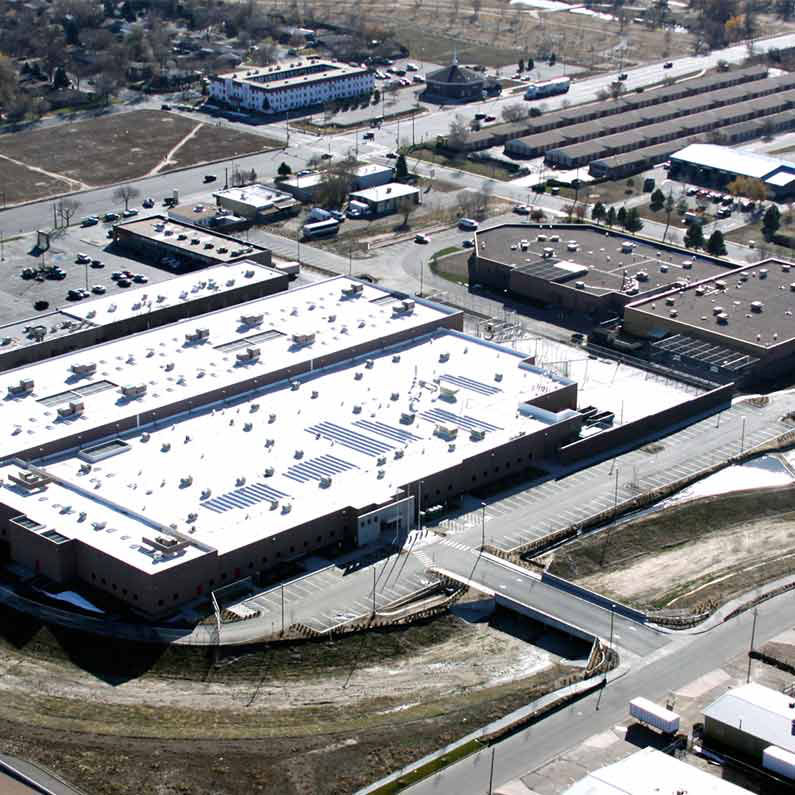
Aurora Detention Facility

Aurora, Colorado, where GEO warehouses immigrants and forces them to clean the stock rooms on threat of solitary confinement.  Is the lawsuit a death knell to GEO's business model, or a possible small glitch?  The answer depends...on whether they're talking to an Appellate Court or their stockholders.

A district court judge in Colorado gave the green light in February for a class action lawsuit against the private prison firm GEO.   Next up was the the complaint filed in Otay Mesa, California on May 31, 2017.  Then, last week, a state government launched an historic lawsuit against the private prison firm.

On September 20, the Attorney General for the State of Washington stepped up to the plate, charging GEO with violating the state's minimum wage laws and also "unjust enrichment."

And as if that weren't bad enough for GEO, on September 26 a team of private attorneys in Washington came in to clean up on behalf of GEO Tacoma's detained employee Chen Chao, including Andrew Free, who is part of the original group suing GEO in Aurora (and the attorney who represents the DRC in our FOIA litigation).  

GEO's stock, now around $26.40, is continuing on a downward trend from its year high in April, 2016 of $34.  In light of the recent filing, it's surprising it isn't lower.  Maybe that's because GEO is telling the Appellate judges one thing and their stockholders something else. 

GEO in their 2016 annual report admitted being sued by the state of Mississippi.  The report states that they are being accused of... 
violations of various public servant statutes, racketeering activity, antitrust law, civil conspiracy, unjust enrichment and fraud. The complaint seeks compensatory damages, punitive damages, exemplary damages, forfeiture of all money received by the defendants, restitution, interest, attorneys’ fees, other costs, and such other expenses or damages as the court may deem proper. The complaint claims that between 2007 and 2014, the Company and Cornell Companies, Inc. received approximately $256 million in proceeds from public contracts paid for by the State of Mississippi. The Company intends to take all necessary steps to vigorously defend itself and Cornell Companies, Inc. The Company has not recorded an accrual relating to this matter at this time, as a loss is not considered probable or reasonably estimable at this preliminary stage of the lawsuit.
In the SEC update released for the period ending June 30, 2017, GEO noted the Aurora litigation:
On October 22, 2014, nine current and former civil immigration detainees who were detained at the Aurora Immigration Detention Center filed a purported class action lawsuit against the Company in the United States District Court for the District of Colorado (the “Court”). The complaint alleged that the Company was in violation of the Colorado Minimum Wages of Workers Act and the Trafficking Victims Protection Act, and claimed that the Company was unjustly enriched as a result of the level of payment that the detainees received for work performed at the facility, even though the voluntary work program as well as the wage rates and standards associated with the program that are at issue in this case are authorized by the Federal government under guidelines approved by the United States Congress. On July 6, 2015, the Court granted the Company’s motion to dismiss the claim against the Company under the Colorado Minimum Wages of Workers Act but otherwise denied the Company’s motion to dismiss. On February 27, 2017, the Court granted the plaintiffs’ motion for class certification. The Court ordered the parties to file a revised Proposed Stipulated Scheduling and Discovery Order by March 27, 2017 to proceed with the case. On March 13, 2017, GEO filed for permission to appeal this class certification order directly to the 10th Circuit Court of Appeal. On April 11, 2017, the 10th Circuit Court of Appeal granted GEO’s petition to hear the case. As a result, GEO has filed a motion to stay the proceedings in the trial court. Fact discovery in the case has not yet begun. The plaintiffs seek actual damages, compensatory damages, exemplary damages, punitive damages, restitution, attorneys’ fees and costs, and such other relief as the Court may deem proper. The Company intends to take all necessary steps to vigorously defend itself and has consistently refuted the allegations and claims in the lawsuit. The Company has not recorded an accrual relating to this matter at this time, as a loss is not considered probable nor reasonably estimable at this state of the lawsuit. If the Company had to change the level of compensation under the voluntary work program, or to substitute employee work for voluntary work, this could increase costs of operating these facilities. (Emphasis added.)
How can it be the case that on June 30, 2017 the company calmly reports that changing the level of compensation "could increase costs of operating these facilities" even though in March, GEO filed an apoplectic petition with the 10th Circuit asserting a very different risk scenario:
[T]he district court's novel certification of a class comprising all people detained at the Facility over the past ten years poses a potentially catastrophic risk to GEO's ability to honor its contracts with the federal government. And the skeleton of this suit could potentially be refiled against privately operated facilities across the United States, causing GEO and other contractors to defend them even though GEO firmly believes that policies give the Plaintiffs no legal claim. (Appellee Petition, 03/13/2017 at 30, emphasis added). 
Which outcome represents GEO's true position on its future ICE contracts if it loses these lawsuits?  Is it merely that a loss "could increase costs of operating these facilities"? Or does the Aurora lawsuit pose a "catastrophic risk"  to GEO's capacity to honor its ICE contracts?  Looks like ICE detainees aren't the only ones who may have a claim of Unjust Enrichment against GEO's directors.

Monday, February 27, 2017

Federal Judge Certifies Class of Detained Immigrants Suing GEO for Violating Trafficking Victims Protection Act and for Unjust Enrichment!


Judge John Kane Order of February 27, 2017, on case brought against GEO for exploiting the people it has locked up and making illegal super profits from their labor:

"I have not found and GEO has not provided any authority requiring that, for TVPA claims, causation must be proven by direct and not circumstantial evidence. Were a jury deciding the individual merits of Representatives claims, it surely would be permitted to make such an inference. Thus, it should
be allowed on a classwide basis as well. See CGC Holding Co., LLC, 773 F.3d at 1092."

Kane notes that precisely because Plaintiffs have few resources and are not native English speakers, class certification is appropriate.


The order in its entirety is here.

For previous complaints, please go here.

If the suit is successful, the private prison industry will be shut down for civil immigration cases--if GEO, CCA, and the other immigration prison profiteers had to pay prevailing wages for work performed, the profits would vanish and so would their incentive to lobby, i.e., bribe, Congress for mandatory detention and other laws that sustain their industry and hurt U.S. residents who lack, or appear to lack, legal status.

Congratulations to the plaintiffs and the legal team behind this!!
Brandt Milstein (Milstein Law Office), Andrew Turner (Buescher, Kelman & Perera, P.C.), Alexander Hood (Towards Justice),  Hans Meyer (Meyer Law Office, P.C.), and Andrew Free (Law Office of R. Andrew Free).

Background: Plaintiff attorneys read this article in the New York Times discussing research published as "One Dollar Per Day: The Slaving Wages of Immigration Jail, 1943 to Present," Georgetown Immigration Law Journal, which owes a lot to the FOIA litigation on my behalf by Andrew Free.  The attorneys investigated GEO's Aurora facility, identified plaintiffs, and sued GEO.  The Fair Labor Standards Act Minimum Wage claim was thrown out, but Plaintiffs will appeal; the TVPA (forced labor), and Unjust Enrichment (Colorado common law) claims are the ones for which Judge Kane certified the class.

Of course there is more legal work and research ahead.  The Deportation Research Clinic is soliciting donations to support our research on this and other government misconduct, including ongoing FOIA litigation over prison contracts.  At present the Clinic research is supported by student volunteer and paid research funded by a few thousand dollars/year from my discretionary account.  All contributions welcome! To donate, please contact kelby AT protonmail.com.  The Clinic is a nonprofit and all donations are tax deductible. 

Thursday, September 17, 2015

Colorado Judge Swats Down GEO's Motion to Reconsider Class Action Lawsuit Brought by Captive Labor Force, New Evidence of GEO Labor Violations


GEO claims paying people fair wages "will result in manifest injustice," and claims that ordering a trial by jury, i.e., the rule of law, "should be corrected before litigation in this case and other cases grows in scale."  (Menocal et al. v. GEO, Doc. 29, Motion to Reconsider, 2, August 4, 2015).

Federal District Court John Kane disagrees. (Doc. 31, Order, August 26, 2015).

In the latest round of motions from a lawsuit last October, GEO whined that laws designed to prevent exactly GEO's exploitation of labor had some other purpose, and that it would be absurd to follow their plain text.  One new argument was that the Plaintiffs had no expectation of fair payments for their labor.  And, GEO argued, it would really suck for them and other prison firms if the lawsuit were to proceed per the judge's previous order.

The judge's response, in two pages of text: the arguments either were the ones he already found unpersuasive from the first round, or a new argument that the Court will not consider "for the first time on a motion for reconsideration." 

New Documents Further Contradict GEO's Defense


Reimbursement invoices for the work program being released in dribs and drabs responsive to my FOIA lawsuit further document that GEO is making up its own pay scales and not just acting as a pass-through for ICE's $1/day payments last authorized by Congress in 1978.  Note that for GEO's Pearsall, South Texas facility, there is one column for the reimbursements from ICE and another for their own outlays.  This is consistent with other documents on which I reported in the working paper "One Dollar Per Day: The Slaving Wages of Immigration Jail, 1942 to Present," soon to be published in the Georgetown Immigration Law Journal.  (I'll fill in the link once it's published.)

This release further illuminates the conditions of a labor force compensated well below the minimum wage.  Excluded from these positions is the local community, once again highlighting GEO's violations of the Fair Labor Standards Act and the Trafficking Victims Protection Act (2008), codified in part in the statute prohibiting Forced Labor. 

According to18 U.S.C. 1589 (a) "Whoever knowingly provides or obtains the labor or services of a person by any one of, or by any combination of, the following means— (1) by means of force, threats of force, physical restraint, or threats of physical restraint to that person or another person ... shall be punished as provided under subsection (d)."

The variation in wages suggests a rudimentary labor market, one with radically depressed wages because of captivity, and not people chipping-in because of boredom to help keep GEO in business.  This is more evidence that GEO is basing its business on forced labor -- were GEO not operating on a business model that assumes they can physically control their workforce, they would need to be paying wages of more than one dollar per day or even three.

Section (d) states: "Whoever violates this section shall be fined under this title, imprisoned not more than 20 years, or both. If death results from a violation of this section, or if the violation includes kidnapping, an attempt to kidnap, aggravated sexual abuse, or an attempt to kill, the defendant shall be fined under this title, imprisoned for any term of years or life, or both."

While President Obama's rounding out his term by using his executive authority to enforce labor rights, maybe he should call up the Department of Labor and send out a few inspectors to check out GEO's cleaning, kitchen, and laundry employment practices in Colorado, Texas, and elsewhere, and charge them with violations of the FLSA and the TVPA.  Or, they could visit facilities run by the Correction Corporation of America or any of the other ICE facilities that use the same business model.

Thursday, July 9, 2015

Colorado District Court Green Lights Historic Lawsuit: Private Prisons Using Forced Labor of ICE Residents Ruled Illegal

Related: Recently Released Documents Show California OSHA 2008 Final Decision Ruling ICE Resident in Employer-Employee Relation with ICE Jail


In an historic decision, on July 6, 2015 Senior U.S. District Judge John Kane issued an order telling Defendant GEO Inc, that if people in their custody under deportation laws could prove they were forced to work, and that GEO was enriching itself as a consequence of this, then plaintiffs in a class action lawsuit would be entitled to millions in damanges. 

This is the first time a court has told a private prison firm housing people under U.S. immigration laws that it couldn't force them to work and that if it did, restitution and damages for this "unjust enrichment" could be pursued.

GEO holds more U.S. residents in custody under immigration laws than any other private prison firm, with the Corrections Corporation of America running second.  The case was brought against the GEO facility in Aurora, Colorado following attorneys reading a New York Times article featuring a link to my working paper, a revised version of which is now forthcoming in the Georgetown Immigration Law Journal.

After previous reporting on my FOIA findings failed to elicit legal interest, I decided to map out the program and legal history to help attorneys navigate a program that survived heretofore because of obscurity and ICE stonewalling on releasing information. Attorney Brandt Milstein saw the Times article, read my paper, and then contacted Andrew Free, FOIA attorney for the Deportation Research Clinic.  (Free is referenced in my paper's acknowledgements and footnotes for his insights based on his review of relevant government documents released under the FOIA).

Free, co-counsel on the case, provided legal research and arguments for the Plaintiff brief, submitted as well by co-counsel Nina DeSalvo, Executive Director of Towards Justice, and co-counsel Andrew Turner, and the rest really is now history.  Regardless of whether the appellate court overturns the decision, the United States now has on record a judicial order stating that private prisons may not force those in custody under immigration laws to work, and that firms can be held responsible for financial penalties if they are found to have done so.  The actual proof of these forced labor episodes is the low fruit--it is copiously documented--and the determination on these points of law will stand as a signficant developement in the history of civil rights accomplishments.

In the 1830s, prosecutors episodically attempted to hold slave owners, and those Whites who rented slaves, liable for criminal charges of cruelty or homicide.  Juries and judges were confused and voted or ordered in an ad hoc fashion--they were appalled by the specific events but also sensitive to the excuse that if people were property their owners could do with them as they pleased.  The legal theories in these cases helped crystallize intuitions about the inherent injustice of slavery and were part of the developing public debates in movements for its abolition.  Using the law to thwart injustice is a long-standing tradition in the United States, as is resistance to this and backlash.  This order is part of that tradition.

For the original complaint, and key excerpts, please go here.  The case is Alejandro Menocal et al. v. The GEO Group, Inc.,  1:14-cv-02887-JLK (D. Colo.).

 Less encouraging, and somewhat confusing, was Judge Kane's decision to follow the Alvarado Guevara precedent and those of Colorado state prison cases in finding that the Plaintiffs were not entitled to damages under Colorado's Minimum Wage Order.  (The specificity of findings related to the private prison profits seem inconsistent with the deference to the 1990 decision in the context of a federal government run facility, and the judge did not grapple with this distinction as it pertains to the definition of a labor market.)

In the event, this was the first case filed; a related cases is pending Suffolk County, Massachussetts and at least one more is being prepared.

New Documents Show ICE Knew Cal OSHA Ruled Mira Loma Work Program Fell Under Cal OSHA Jurisdiction: Employer-Employee Relation Found

Finally, according to information released to me recently through FOIA litigation I am now updating the forthcoming article to reflect the fact that in 2007 Cesar Gonzalez Baez, an ICE resident working for the Los Angeles Sheriff Department while housed at its Mira Loma facility, died after his jackhammer hit a power line and 10,000 volts of direct current charged through his body. Other horrified workers witnessed this.  After immediate brain damage Mr. Gonzalez died two days later.

The purpose of his labor?  Holes for new fence poles needed to expand the facility's perimeter responsive to ICE's demand for more bed space.   Cesar Gonzalez died so that ICE could lock up more U.S. residents.  (The Mira Loma facility was for those detained in the L.A area; when I observed hearings in 2009, everyone was a long-time resident of the United States and had extensive family ties; most were teenagers who'd grown up in the area and were picked up on minor or pretextual misdemeanor charges.)


There are numerous other episodes reflected in grievances released to me in this 501 page document. A full analysis is forthcoming in the law review article, but one point bears mention here: ICE's persistent confusion of its public affairs office with a propaganda outfit.  In the same time frame in which ICE was claiming to journalists, myself included, that the program was completely legal and that the ICE residents working in the facilities were not employees, the ICE top brass knew of a 2008 Caslifornia OSHA final decision finding that Cesar Gonzalez WAS in an employee-employer relation and that the LA County Sheriff had violated California's OSHA law.

ICE needs to stop pretending this work program is legal and at the very least immediately reflect the policy implications of the Cal-OSHA finding in its California private prison contracts, including with GEO's Adelanto facility, near Vacaville, the location to which the Mira Loma residents were transferred when that contract expired in 2012.

The Deportation Research Clinic, housed in the Buffett Institute for Global Studies at Northwestern University, conducts research informed by the emerging paradigm of forensic intelligence, whereby scholarship is tied to analyzing and creating new legal discourses and facts.

Thursday, October 23, 2014

GEO Sued for Minimum Wage and Forced Labor Law Violations, and Unjust Enrichment

Lawsuit seeks $5 million in minimum wage law damages and also compensatory and exemplary damages for Forced Labor (18 U.S.C. § 1589), 
and Unjust Enrichment 

American Friends Service Committee, May, 2010 vigil at GEO facility in Aurora, Colorado, sign reads, "We are not the NEW SLAVES"
Yesterday, Alejandro Menoca, Marcos Brambila, Grisel Xahuentitla, Hugo Hernandez, Lourdes, Argueta, Jesus Gaytan, Olga Alexaklina, Dagaberto Vizguerra, and Demetrio Valerga on their own behalf and others similarly situated filed a complaint informing a federal judge that their guards were breaking the law.

The complaint, filed by an intrepid team of lawyers who spent extensive time interviewing detainees at the GEO facility in Aurora, Colorado, states:
In the course of their employment by GEO, Plaintiffs and others scrubbed bathrooms, showers, toilets, and windows throughout GEO’s Aurora facility. They cleaned and maintained GEO’s on-site medical facility, cleaned the medical facility’s toilets, floors and windows, cleaned patient rooms and medical staff offices, swept, mopped, stripped, and waxed the floors of the medical facility, did medical facility laundry, swept, mopped, stripped, and waxed floors throughout the facility, did detainee laundry, prepared and served detainee meals, assisted in preparing catered meals for law enforcement events sponsored by GEO, performed clerical work for GEO, prepared clothing for newly arriving detainees, provided barber services to detainees, ran the facility’s law library, cleaned the facility’s intake area and solitary confinement unit, deep cleaned and prepared vacant portions of the facility for newly arriving detainees, cleaned the facility’s warehouse, and maintained the exterior and landscaping of the GEO building, inter alia.
 The complaint also includes violations of a federal law prohibiting Forced Labor, 18 U.S.C. § 1589:
5.  GEO or its agents also randomly selected six detainees per pod each day and forced them to clean the pods. In the handbook that GEO distributed to the detainees, GEO announced a “Housing Unit Sanitation” policy informing the people held at the facility that “[e]ach and every detainee must participate in the facility’s sanitation program.”
6. GEO or its agents forced Plaintiffs and other civil immigration detainees to clean the facility’s pods for no pay and under threat of solitary confinement as punishment for any refusal to work.
 And the complaint references Colorado Common Law prohibiting Unjust Enrichment.  In precise and riveting language the 21 page brief brilliantly lays out the legal problems with the private prison industry's business model.

 The attorneys who filed this lawsuit are Brandt Milstein, Boulder, CO; Andrew Turner, Denver, CO; Alexander Hood, Golden, CO; Hans Meyer, Denver, CO; and Andrew Free, Nashville, TN.

I have been filing FOIA requests on this topic for several years and Andrew Free is currently representing me in extricating additional material for use in a working paper that will be revised for publication next year in the Georgetown Immigration Law Journal.  For more research on related violations, please go here.